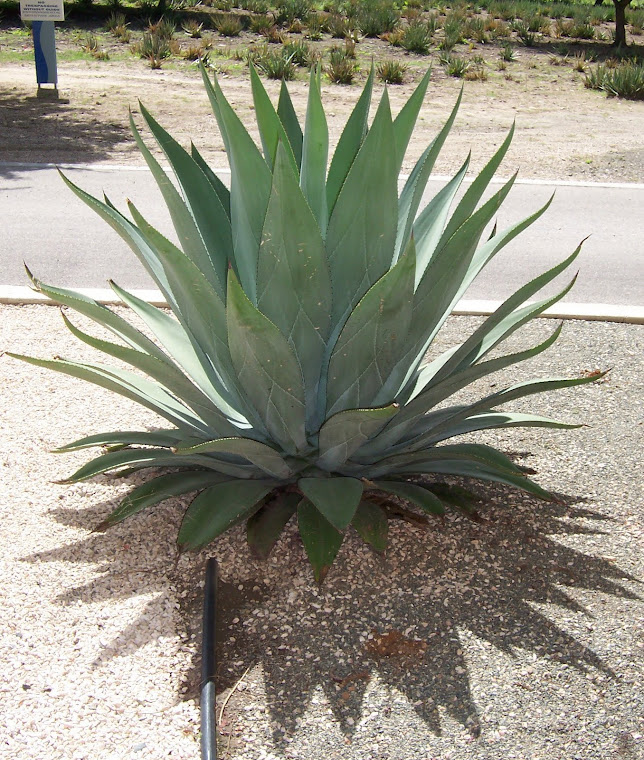
Aruba

Aruba
aloe factory
"Never doubt that a small group of thoughtful, committed citizens can change the world: indeed, it's the only thing that ever has." Margaret Mead

Our greatest glory is not in never falling but in rising every time we fall--confucius

"The world is a book, and those who do not travel read only one page." anon

A man is but the product of his thoughts--what he thinks, he becomes. Gandhi


I am only one, but still I am one.
I cannot do everything,
but still I can do something;
and because I cannot do everything,
I will not refuse to do something that I can do. edward everett hale
Doom to you who legislate evil, who make laws that make victims -- laws that make misery for the poor, that rob my destitute people of dignity, exploiting defenseless widows, taking advantage of homeless children. What will you have to say on Judgment Day, when Doomsday arrives out of the blue? Who will you get to help you? What good will your money do you? (Isaiah 10:1-3, The Message)

There is nothing in the world more beautiful than the forest clothed to its very hollows in snow. It is the still ecstasy of nature, wherein every spray, every blade of grass, every spire of reed, every intricacy of twig, is clad w/radiance. william sharp

I think no matter how old or infirm I may become, I will always plant a large garden in the spring. Who can resist the feelings of hope and joy that one gets from participating in nature's rebirth? edward giobbi

Let us be grateful to people who make us happy; they are the charming gardeners who make our souls blossom. marcel proust

I am only one, but still I am one.I cannot do everything,but still I can do something;and because I cannot do everything,I will not refuse to do something that I can do. edward everett hale


Friday, July 8, 2016

july


Senate approves, sends GMO labeling bill to House

 Category: Politics

by Jeremy C. Nagel

lady thinking on food

With a late-night 63-30 vote, the U.S. Senate approved its GMO labeling bill, sending the measure forward for consideration in the U.S. House of Representatives, where it could see a vote next week. The bill aims to establish a mandatory, national GMO labeling standard and would forestall a patchwork of state-level labeling laws like the one that took effect July 1 in Vermont.
Farm Bureau policy explicitly favors voluntary labeling over mandatory, but the bill earned support from the American Farm Bureau Federation (AFBF) on the merit of several other provisions that are consistent with the organization's policy:
  • Federal preemption protecting interstate commerce and prevent state-by-state labeling laws
  • National definitions and standards for labeling products containing biotech ingredients, determined by the USDA
  • A strong, narrow definition of bioengineering for labelling purposes, protecting future innovations from being stigmatized as "GMO"
Since the June 23 compromise brokered between Senate Agriculture Committee Chairman Pat Roberts (R-Kan.) and Ranking Member Debbie Stabenow (D-Mich.), the measure has seen encouraging bipartisan support among lawmakers.
"Today marks a significant milestone in the fight for a more transparent food system," Stabenow said. "The advocates that helped raise this issue to a national level should be proud of this accomplishment."
The Michigan Senator hailed the bipartisan measure as "a step in the right direction for our nation's farmers and food producers."
"Throughout this process I worked to ensure that any agreement would recognize the scientific consensus that biotechnology is safe, while also making sure consumers have the right to know what is in their food," Stabenow said. "Looking forward, it's important that consumers, farmers, food manufacturers and policy makers come together to address critical issues and pursue our shared goals of improving our food system.
She also praised Sen. Roberts' efforts in forging the compromise and moving the issue forward.
Sen. Roberts called the passage "a victory for farmers, ranchers, sound science and anyone who eats on a budget.
"Getting to an agreement wasn't easy, but today's strong showing in the Senate is a result of the way we get things done in the agriculture committee-with hard work and bipartisanship," Roberts said. "I thank Ranking Member Stabenow for her continued partnership."
Despite the bill's mandatory nature, Farm Bureau leadership agreed the potential negative consequences of the pending Vermont law-and the potential for other states to adopt similar laws-warrants federal legislation providing national labeling uniformity.
The proposal calls for offering consumers three options for learning more about the exact content of purchased food products:
  • On-package symbols
  • On-package words
  • Electronic labels (like a QR code) linking consumers to detailed food-content information online
Animal feed would be exempt from labeling provisions, meaning meat, dairy and egg products would not be required to disclose genetically engineered content.
The bill also includes a binding definition of biotechnology, finally codifying what the term does and doesn't pertain to. It also provides flexibility for small companies to meet its requirements, and exempts cottage food businesses altogether.
Farm Bureau members nationwide are encouraged to urge their Congressmen in the House of Representatives to support the legislation. Read the full labeling agreement here.
Urge House Action on GMO Labeling next week!
Contact your U.S. Representative using Michigan Farm Bureau's Legislative Action Center (no login required), and urge them to support the GMO labeling legislation that passed in the Senate. The site is easy to use, and, with the prewritten letter, it will take just a few short minutes to complete the action request.


GREEN

This Lawsuit Has Put Big Ag On The Defensive In A Major Way

A pending Iowa case could set a new national precedent for water pollution stemming from farms.

 07/30/2016 08:12 am ET


CHARLIE NEIBERGALL/AP
A farmer drives his tractor past a soybean field near Ladora, Iowa. The state’s agriculture lobby is fighting a lawsuit that could set a new national precedent for farming-related water pollution.
Earlier this month, the Iowa Soybean Association had a big announcement to make.
The group, which represents some 11,000 growers of the state’s second-most-lucrative crop, pledged $150,000 in support for three highly agricultural counties — Buena Vista, Calhoun and Sac — named in a controversial lawsuit brought by the Des Moines Water Works.  
The lawsuit, which was filed in 2015, claims that nitrogen-rich water flowing off the area’s farms pollutes the Raccoon River, which, along with the Des Moines River, provides drinking water for half a million people. The water authority wants the counties to pick up the dramatically higher treatment costs for the water. The counties, who want the case dismissed, counter that there’s no proof that agriculture is directly responsible for the nitrates.
The case has thus far been upheld, though it won’t be brought to trial until next June. Meanwhile, both sides are digging in for a pivotal Iowa Supreme Court hearing on the matter set for September. 
If the water utility wins the suit, it would mark the first time in the U.S. that agribusiness is forced to pay for water pollution, potentially setting a precedent with nationwide ramifications.
The ISA, which previously contributed $65,000 for the counties’ legal expenses, considers the case a “must win.” Meanwhile, it says, the lawsuit is an “unfortunate distraction” from the voluntary approaches to solving the state’s nutrient runoff issues that it has been touting. 
ISA CEO Kirk Leeds said the suit is affecting the progress the state has made over the past 15 years in encouraging farmers to implement practices to mitigate runoff, like putting cover crops and conservation tillage in their fields.
“The lawsuit does not identify one tangible tactic or strategy that would actually improve water quality,” Leeds told The Huffington Post in a statement. “Without the lawsuit, labor and financial resources could be focused on deploying more practices across the state to improve soil and water resources.”
The ISA pointed to the over 970,000 acres Iowa farmers have enrolled in the federal conservation reserve program — more than any other state — as further signs the state’s industry is on the right track toward addressing the problem. (The program removes environmentally sensitive lands from agricultural production, which helps improve water quality and wildlife habitat.)

CHARLIE NEIBERGALL/AP
Des Moines Water Works CEO Bill Stowe testifies during an Iowa Department of Natural Resources water hearing. Stowe is leading the utility’s fight against Big Ag water pollution.

But the ISA’s efforts are “nothing more than greenwash” to Des Moines Water Works CEO Bill Stowe. 
“They’re sprinkling money and acting like they have some kind of environmental awareness when, in fact, they’re undermining public health and environmental protections,” Stowe told HuffPost. 
The ISA isn’t the only group supporting the defending counties in the lawsuit, but it’s hard to know who’s been paying the rest of the bill. As the Des Moines Register has reported, the donors picking up 90 percent of the counties’ $1.1 million legal tab are anonymous and likely to remain that way, thanks to a state law regulating private foundation contributions to government groups.
Stowe’s utility has been spending a lot of money, too — seven figures’ worth of extra treatment costs to ensure the drinking water he delivers to their customers is safe, he said.
The DMWW is home to what he calls the “world’s largest” nitrate removal facility. The plant is in need of repairs and expansion, he said, thanks to the historically high amount of nitrates they’ve had to remove from the drinking water they provide to their customers.
Excessive nitrate exposure is most dangerous for infants and pregnant women, according to the Centers for Disease Control and Prevention. Infants who are exposed can develop what’s called blue baby syndrome, which can be fatal if left untreated. For these reasons, the EPA sets a maximum contaminant level for nitrates of 10 milligrams per liter. Anything higher needs to be removed by water providers. 
In 2013, when nitrate levels in the source water reached a record high, the utility’s tab for additional treatment costs and lost revenue totaled $900,000, DMWW said. Last year, it spent $1.5 million on denitrification efforts.

CHARLIE NEIBERGALL/AP
Inside the nitrate removal facility at the DMWW plant. Stowe calls his facility the world’s largest of its kind, but says it needs to get even bigger to keep up with increased nitrates in the water.

Stowe argues that tile drainage systems used by the upstream farms to reduce crop flooding should be identified as “point sources” of pollution under the federal Clean Water Act, from which they traditionally have been exempt.
The Iowa lawsuit could drastically change how the Clean Water Act can be used to remedy nutrient pollution, which is having a severe impact on communities throughout the U.S. 
For this reason, the suit carries national significance. John Rumpler, senior attorney at Environment America, a Boston-based nonprofit, called it a “huge, precedent-setting” matter.
Rumpler authored a report last month linking nutrient runoff from agribusiness to the growth of algal blooms and dead zones that have devastated ecosystems and damaged local economies in places like Lake Erie, the Chesapeake Bay and the Gulf of Mexico. The EPA has also linked nutrient runoff to acid rain and air pollution.
He sees what is happening in Iowa as one example of runoff issues bubbling up nationwide, like South Florida’s “guacamole-thick” algal blooms that prompted Gov. Rick Scott (R) to declare a state of emergency earlier this summer. Environmentalists have largely blamed agriculture, and particularly the powerful sugar industry, for the pollution.
“The overriding story here is that the corporations that are producing our food in an industrializing fashion are now threatening our water,” Rumpler said. “America should not have to choose between healthy food and safe water.”

Friday, June 3, 2016

june 2016

from yes magazine summer 2016:
average cost 2012 for losing campaign for US house of reps = 540,022
                              for winning = 1,567,379
for losing US senate = 7,434,819
for winning = 11,474,362


delivering normal baby in US = 10,002
                                       in netherlands = 2,824


Michigan Loses ‘Right To Farm’ This Week: A Farewell To Backyard Chickens and Beekeepers

Little blond girl with farm chickens in pen.
Michigan residents lost their “right to farm” this week thanks to a new ruling by the Michigan Commission of Agriculture and Rural Development. Gail Philburn of the Michigan Sierra Club told Michigan Live, the news changes “effectively remove Right to Farm Act protection for many urban and suburban backyard farmers raising small numbers of animals.”
Backyard and urban farming were previously protected by Michigan’s Right to Farm Act. The Commission ruled that the Right to Farm Act protections no longer apply to many homeowners who keep small numbers of livestock.
Kim White, who raises chickens and rabbits, said, “They don’t want us little guys feeding ourselves. They want us to go all to the big farms. They want to do away with small farms and I believe that is what’s motivating it.”
The ruling will allow local governments to arbitrarily ban goats, chickens and beehives on any property where there are 13 homes within one eighth mile or a residence within 250 feet of the property, according to Michigan Public Radio.
The Right to Farm Act was created in 1981 to protect farmers from the complaints of people from the city who moved to the country and then attempted to make it more urban with anti-farming ordinances. The new changes affect residents of rural Michigan too. It is not simply an urban or suburban concern.
Shady Grove Farm in Gwinn, Michigan is the six and a half acre home to 150 egg-laying hens that provide eggs to a local co-op and a local restaurant. The small Michigan farm also homes sheep for wool and a few turkeys and meat chickens to provide fresh healthy, local poultry.
“We produce food with integrity,” Randy Buchler told The Blaze about Shady Grove Farm. “Everything we do here is 100 percent natural — we like to say it’s beyond organic.
We take a lot of pride and care in what we’re doing here.” Shady Grove Farm was doing its part to bring healthy, local, organic food to the tables of Gwinn residents, and it mirrors the attitudes of hundreds of other small farming operations in Michigan and thousands of others popping up around the nation.
The ruling comes within days of a report by The World Health Organization that stated the world is currently in grave danger of entering a post-antibiotic era. The WHO’s director-general Dr. Margaret Chan argued that the antibiotic use in our industrialized food supply is the worst offender adding to the global crisis.
“The Michigan Agriculture Commission passed up an opportunity to support one of the hottest trends in food in Michigan – public demand for access to more local, healthy, sustainable food,” Gail Philbin told MLive.
Meanwhile, neighboring Indiana Governor Mike Pence signed Senate Bill 179 a few weeks before which freed up poultry and egg sales from local and state regulation.
Yesterday, the USDA Secretary Tom Vilsack announced massive funding to support research about small and medium-sized family farms, such as small farms ability to build-up local and regional economic systems. “There’s a lot of unnecessary legal action being taken against small farms who are doing good things in their communities,” said Randy Buchler, who is also on the board of directors for the Michigan Small Farm Council.
The Michigan Small Farm Council  actively fought to support Michigan farming freedom, but ultimately the Commission voted to approve the new restrictions.
“Farm Bureau has become another special interest beholden to big business and out of touch with small farmers, and constitutional and property rights of the little guy,” Pine Hallow Farms wrote to the Michigan Small Farm Council.
The Michigan Farm Bureau endorsed the new regulatory changes. Matthew Kapp, government relations specialist with Michigan Farm Bureau, told MLive that the members weighed in and felt that people raising livestock need to conform to local zoning ordinances. The Farm Bureau did not feel Michigan’s Right To Farm Act was meant to protect the smaller farms, and ultimately the Michigan Commission of Agriculture and Rural Development agreed.

Monday, May 2, 2016

may 2016

from graves newsletter--our state gov at work

Oversight Subcommittee on Unemployment Reform
I have been named to chair a special subcommittee of the House Committee on Oversight and Ethics that will develop solutions to make the Michigan Unemployment Insurance Agency more efficient and effective. There have been two Auditor General reports that have showed that there are several serious flaws in our current UIA system and we need solutions that will make the process work properly. Among the discrepancies found in the reports were security and accessibility issues with the Michigan integrated Data Automated System (MiDAS), and problems with the phone center that caused 89 percent of the 263,726 calls made to the center to go unanswered during a two week period. This is unacceptable and we seek to effectively address the shortcomings and come up with realistic solutions.

the week may 13,2016  "for firms in the s&p 500 the gap bet official profits and 'adjusted 'ones is now about 20% well above the long term trend.  more than ever, investors need to read between the lines.  a mature company that can't make a profit using standard accounting rules should be approached w/a barge pole.  companies need to be reminded that it's their responsibility to accurately report their performance, not to polish reality as if they were selling second hand cars"
(the economist)  (adjusted profits = way of making the bottom lines look more flattering)

show to watch -- the night manager

one of the penalties for refusing to participate in politics is that you end up being governed by your inferiors.   plato

list of 102 million in trump's charitable donations compiled by his campaign, he did not make a single gift of his own money.  most of the 4844 donations listed were free rounds of golf at his courses for charity auctions and events.  he also claimed that decisions not to fully develop his properties as charitable donations--washington post

requested dark money, homage to catalonia by george orwell

sonnerie aux morts--for french funerals

harvestright.com = freeze dryer, expensive

freywine.com/near-you = can order wines from frey also


cabinet cleaner -- orange oil polish or =  2 tablespoons olive oil, 4 TBLS white vinegar and enough water to fill 16 oz spray bottle.  shake to mix, spray on 1 area at a time, use soft cloth to remove any dirt, then buff.   shake before spraying again

american farm bureau federation pres bob stallman said the organ looks forward to working closely w/the new speaker....he highlighted some of the new speaker's successes in the eyes of farmers and ranchers like his support for sensible changes in enforcement of the endangered speciies act as well as open and fair trade.  in addition ryan has 'fought chronic overreach by the EPA and has been working to bring needed relief on the tax burden farmers and ranchers face'


Mich farm news:

Fear amid the labels: Let’s change things

 Category: Opinion

by Carl Bednarski

bednarski new
Carl Bednarski

Why should people keep things in their heads when a Google search quickly brings everything they want to their fingertips? Here's why: Much of what they find is false.
Falsehood runs rampant in the debate over genetically modified organisms, most commonly and in some circles pejoratively called GMOs.
This process by which some crops are grown (there are only nine that use this technology) has been so maligned and slandered that most of the consuming public has no idea what it is, why farmers use it or why the world needs it. Instead, unsuspecting consumers go to the Internet. Almost instantly, up pops bad information, most of it propaganda from anti-agriculture sources with friendly-sounding names.
It wouldn't be so bad if people were questioning the technology, actually looking for answers and then accepting the best, most unbiased information from the most trusted sources. But often, the first things they see plant fear and fertilizes it with propaganda.  These opportunists seek financial gain from sowing fear, and they're succeeding.
Some people say there is no bad information. Their opinion is that we can only make a decision after we know everything.
First, it's impossible to know everything. Ask the Internet to define love or tell you where the laws of motion came from; or grow a tree from nothing.
Second, we can't know the future. Thirdly, when information contains deceit, it's bad information. If it's bad information, it's wrong, and it leads us to some very wrong conclusions. It's like planting crops without knowing what seed is in your bag.
Similarly, there is no productivity in the vitriol against the GMO process. But let's step back from the lies and fear and look from a thousand-foot perspective.
That view tells me we need to fight the misinformation, not the technology. It is misinformation, and fear of that misinformation, that has paralyzed Congress on the issue. Most lawmakers, being privy to the best information about the technology — that is, the unbiased, scientific data — know that the GMO process does not produce poison, does have time-tested, careful scientific evaluation behind it and does provide a service to feed a hungry world.
But our lawmakers also understand that there are a lot of voters who have chosen to believe the bad information and will vote based on the deceit. So the lawmakers, at this point, won't sow any seed.
What can we do about it?
We have to step up. Sadly, many people don't know any better. Instead of going to the universities or the scientists who performed the tests, they look to the self-proclaimed experts (quite often celebrity "experts") to tell them what they want to hear.
We need to be more aggressive on issues we know are being fertilized by wrong information. We need to go beyond our social circles to people who are being deceived, and offer them the right information. We need to ask them if they'd prefer to listen to an expert or the Internet? The answer could tell us a lot about our culture.
Not long ago, I had a conversation with a woman during a visit to a county Farm Bureau president's farm. She is a highly educated career person with a stable mind, but she'd been buffaloed by fear amid the labels.
She said she would always choose non-GMO labeled food, would always choose natural (thinking it is organic, which it is not), and would never buy milk with hormones in it.
We asked her if she knew what a GMO is, and she said "it's bad for you." She didn't know why. Conversely, she assumed that food labeled as "non-GMO" must be a good choice.
We explained to her that genetic modification is a process, not an ingredient. We asked her if she would deny her children antibiotics when they're sick. We explained that all milk has natural hormones.
After our conversation, she admitted that she never knew these things. No one had ever explained them to her. She trusted the label, not thinking that labels are marketing tools, not endorsements for health.
That conversation showed me just how important it is to educate the public about their food, to make them aware of deceptive labeling and to help them understand that farmers deal in food and nutrition, not marketing and labeling.
On an even bigger scale, we need to educate consumers and change our culture. The overall culture needs to be more like farmers. We don't listen to celebrities. We look at science, and for many of us, we're uncomfortable making decisions until we have the scientific facts. And we don't take the first person's word we find on Google.
We need to take opinion further, too. We need to understand that there is profit in marketing misunderstanding. There also is profit in variety, and there's the paradox. If everyone was selling the same product, prices would all be the same. But because things are slightly different — conventional, organic, local, etc., marketing comes into play.
I understand that it's sometimes easy to fall for marketing ploys. But just because a product claims something on the label doesn't mean it has any reality behind it.
Sugar is a good example. Soon you're going to see labels that say this package of sugar is GMO-free. However, there is no scientific test that can prove it. GMO tests come from protein, and sugar has none of it. So marketers can make all the claims they want. I simply ask them to prove it. I ask the celebrity mouthpieces to show us where they obtained their "expertise."
The overall point is this: Let's get our minds churning toward a solution to the public's confusion about things we farmers know well. As you spend time in your fields this spring, think about solutions to the public's woefully inadequate and manipulated thinking about the food you grow. Remember it's the best-quality food in the world, and you should be rewarded for doing that, not cowed by marketing campaigns that create doubt over everything you do.
I highly recommend that your visit gmoanswers.com or a number of other websites that will give the truth about technology. More importantly, you as farmers need to tell deceived consumers the truth. You don't need a public relations degree. You just need the truth and the willingness to share it.
- See more at: https://www.michfb.com/MI/Farm-News/Fear-amid-the-labels-Lets-change-things/#sthash.Y4Uf8qfo.owabkSuv.dpuf


EPA scrutiny on fruit insecticides called ‘pseudo-science’

 Category: Fruits & Vegetables

by Farm News Media

Apple Spray
“These review processes that EPA facilitates are important, and needed, Robson said. “However, there needs to be a scientific part to the process, and a multi-year data-set created, to aid EPA in making their determination on whether or not to re-register a certain product.”
Four insecticides important to Michigan's fruit industry are under fire by the Environmental Protection Agency this summer, but the EPA scrutiny is not because of its supposed mission to protect the planet, according to Kevin Robson, horticulture specialist with Michigan Farm Bureau.
"All too often, EPA makes decisions based on false truths, emotions, and theoretical pseudo-science, provided by small-interest activist groups," he said. "These groups are most likely made up of folks who regularly consume the safe, healthy, fruits and vegetables that are free of insects and pathogens because of the very crop protection materials they are speaking out against."
The following are fruit insecticides under EPA regulatory action, according to John Wise, MSU Extension entomologist. More information may be found atMichigan State University Extension bulletin E0154, "Michigan Fruit Management Guide," product numbers are in parenthesis ().
Lorsban (32) (chlorpyrifos). There are a number of actions ongoing that are impacting the future of Lorsban, including review by the EPA Scientific Advisory Panel, Wise said.
"Dow AgroSciences expects that chlorpyrifos products will continue to be utilized and sold under the existing labels and tolerances through at least 2017. If EPA actions are taken such that chlorpyrifos becomes immediately unable to be sold, Dow will work with growers and distributors to manage inventory of DAS chlorpyrifos at that time," he said.
Belt (89) (flubendiamide). EPA requested Bayer CropScience to voluntarily withdraw registrations for flubendiamide-containing products. Bayer refused that request and have asked for a formal hearing before the EPA's Administrative Law Judge, which is expected to be finalized by July 2016.
The Administrative Law Judge agreed to a 22-day extension of the before-mentioned 75-day deadline for the administrative law hearing regarding BELT insecticide and has now communicated the "Order Scheduling the Hearing and Prehearing Procedures."
With this extension, Wise said, "we now expect a final decision about the future path forward for the registration of flubendiamide on or about July 6, 2016. While under review, farmers and retailers can continue to buy, sell and use the product in their operations."
Closer (8) (sulfoxaflor). On Nov. 12, 2015, EPA cancelled the registrations of sulfoxaflor-containing products as required in a Sept. 10, 2015, decision by the Ninth Circuit Court of Appeals.
The cancellation affects Transform WG, Closer SC and Seeker insecticide products, which contain sulfoxaflor.
"It is our understanding that Dow AgroSciences is working with EPA to achieve new registrations, and submitted new labels for consideration to EPA in late 2015," Wise said. "In addition, it is our understanding that several states are now in the process of submitting or developing Section 18 applications for the 2016 use season. According to the terms of the existing stocks provision of the cancellation order, any Transform, Closer or Seeker that have been in the grower's possession since Nov. 12, 2015, may be used according to the previously approved labeling. There is no deadline for this product to be applied by the grower. The product in grower's hands may also be used for any Section 18 Emergency Exemption that may be granted."
Calypso (62) (thiacloprid). Bayer CropScience notified EPA of a voluntary cancellation of the Calypso insecticide registration, including the technical registration of thiacloprid. This decision has to do with EPA's registration review process and the new water model, adopted by EPA in early 2013. Bayer CropScience has notified states and requested that Calypso be allowed for use through the existing stocks provision. Bayer CropScience will plan to maintain the state registrations through 2016.
"It is critically important that we file comments to EPA regarding these fruit insecticides," Robson said. "Michigan Farm Bureau has filed comments in support of the re-registration of Chlorpyrifos, has submitted comments in support of Bayer's refusal to withdraw Flubendiamide, and just recently submitted comments supporting the use of Paraquat-dichloride, and its application techniques."
It seems, Robson said, that the EPA is intent on promoting the radical environmentalist agenda rather than examining real evidence with an unbiased view.
"It's so frustrating," he said. "I look forward to a time when we can submit comments to EPA, thanking them for a job well done, making decisions that are based on FIFRA guidelines.
"These review processes that EPA facilitates are important, and needed, he said. "However, there needs to be a scientific part to the process, and a multi-year data-set created to aid EPA in making their determination on whether or not to re-register a certain product."
    

Top Articles

- See more at: https://www.michfb.com/MI/Farm-News/EPA-scrutiny-on-fruit-insecticides-called-pseudo-science/?utm_source=Informz&utm_medium=Email&utm_campaign=Michigan+Farm+Bureau#sthash.IxNbzz4a.dpuf

Monday, April 4, 2016

april 2016

visited oscar 4-4-2016 before vacation and got info for christina about wedding gift chest.  it was made by the man living south of uncle max who worked for a woodshop in oxford.  oscar thought he died about 2 years ago.  i believe max told me he had to sell his personal tools sometime after 2007 when the family ran into financial problems.  chest is the walnut plus oak trim and the walnut was cut from the hill area on the south side of bristol rd west of the old circus ranch in 1946.  oscar thinks grandpa bought the trees to cut.  wood was milled on walker rd w/their sawmill.  i knew that a log got away when they were cutting the trees down and rolled downhill but i didn't remember anyone saying that oscar was lifting the log on the john deere (no water in the left tire) and as he turned the tractor to load it maybe on the truck the tractor tilted and went over, the log rolling downhill. (i think max told me he had to run to not get hit by the log.)  i think a gear or loader shift was behind oscar on the left but he couldn't reach back to it fast enough.  oscar got thrown into a thistle bush.  i asked how they righted the tractor and he said w/the truck.

oscar then related a sawmill incident on walker road.  he rode the 'carriage' on the mill to move the spacer over after each slice.  it jumped the track and he was heading toward the blade w/his knees.  he said the blade was probably 12-15 inches above the log but he was able to put his knees on the log and go over backwards. he told grandpa floyd that was the last time he'd ride it like he had been doing for about a year.  they bought a log setter so someone could stay on the ground and shift the blade from there

floyd sold sawmill--didn't tell al until someone came for it and sold the oil pull tractor when someone flew over the land, spotted the tractor, offered to buy it for scrap, and he sold it for 250.  they came and cut it up.  (after wwII)  said he needed money to go out to chesaning.

grandpa's house was rough hewn logs with pine boards as subflooring and walls and the 2 x 4s were really that size, not like today's size.  flooring was angled (visible in 2 unfinished closets)


michigan farm news march 30 edition p3. article by jake ferris professor emeritus w/the dept of ag, food and resource economics at MSU: "the byproducts of mandatory labeling of GE foods are as follows: 1-US food prices will increase 2-the environment will be harmed 3-efforts to enhance economic development in poor countries will be held back 4-the promise of GE to help feed another 2 billion people on this earth will be diminished.....Mandatory labeling of GE food would not only be tragic, but, in my judgement, also outrageous."


painted doubles hellebore--perennial
durban canna --for garden and containers

to attract hummingbirds:  early bloomers = bleeding heart, columbines, coral bells, iris
                                         summer = daylilies, penstemon, garden phlox, bee balm, salvia, cardinal flower
                                         fall = liatris, coneflower
                                         add = clematis, native honeysuckle

moon garden:  moths, native bees, bats like white and pale flowers w/intense fragrance and lots of nectar
try honeysuckle, columbine, amsonia blue star
plants with silver and grey foliage = lavender, woolly lambs' ears, horned poppy, sea kale, helichrysum, , santolina, silver blade evening primrose, pussy toes, sage


after finding a wild turkey nest in the raspberries:

Breed first, nest later

Copulation or breeding must first take place for hens to produce fertile eggs.
The timing of breeding is determined by the female turkey and researchers are now learning that physical conditioning may have a greater influence on reproduction. Reserachers believe a hen is not suited to take on the rigors of nesting unless physically in a condition to do so. Therefore, poor conditioning caused by poor nutrition can be blamed for late nesting.

The nesting period

It takes hens about two weeks to lay a full complement of nine to 13 eggs. Hens will only visit the nesting site long enough to deposit her egg for the day. The rest of her time will be spent elsewhere feeding and roosting.
At the end of the laying period, incubation starts. During this time, the hen puts herself in danger to stay on the nest day and night for about 28 days. She needs to bulk up prior to nesting and may take a brief recess period around mid-day to feed on protein-packed insects.

Little is known about how hens select their nesting sites, but as a general rule hens prefer:

  • Nesting cover within 30 meters of an opening of suitable brood habitat, such as a road shoulder, trail, field, food plot, utility right of way, forest canopy gap or other openings
  • Nest sites with considerable lateral cover and light overhead cover such as tree limbs, briars, vines, broom sedge or other vegetation
  • Nest sites which provide hens good visibility of predators when she raises her head and also good concealment of her body and nest when at rest

Predator problems

Before hatching, nests are in danger of foxes, skunks, bobcats, raccoons, opossums, coyotes, crows, hogs, dogs and some snakes. After hatching, avian predators, such as hawks and owls also threaten poult lives.
Various studies indicate 10 to 40 percent of nests successfully hatch. Then, only about 25 percent of hatching poults will make it beyond four weeks.
 The good news is despite huge predation losses each year. Most areas seem to produce enough surviving young to replenish annual losses. Excluding weather events beyond man’s control, improving brood and nesting habitats can increase the number of young that survive each year.

How you can help:

  1. If your landscape is dominated by old growth hardwood forests, consider a light thinning of low wildlife value trees because with more brood and nesting habitat, predators can’t concentrate their search habits.
  2. On pine sites, practice thinning and prescribed-burn tactics because research indicates that turkeys favor nesting in open canopy pine sites burned during the previous year’s burning season.