Aruba

Aruba
aloe factory
"Never doubt that a small group of thoughtful, committed citizens can change the world: indeed, it's the only thing that ever has." Margaret Mead

Our greatest glory is not in never falling but in rising every time we fall--confucius

"The world is a book, and those who do not travel read only one page." anon

A man is but the product of his thoughts--what he thinks, he becomes. Gandhi


I am only one, but still I am one.
I cannot do everything,
but still I can do something;
and because I cannot do everything,
I will not refuse to do something that I can do. edward everett hale
Doom to you who legislate evil, who make laws that make victims -- laws that make misery for the poor, that rob my destitute people of dignity, exploiting defenseless widows, taking advantage of homeless children. What will you have to say on Judgment Day, when Doomsday arrives out of the blue? Who will you get to help you? What good will your money do you? (Isaiah 10:1-3, The Message)

There is nothing in the world more beautiful than the forest clothed to its very hollows in snow. It is the still ecstasy of nature, wherein every spray, every blade of grass, every spire of reed, every intricacy of twig, is clad w/radiance. william sharp

I think no matter how old or infirm I may become, I will always plant a large garden in the spring. Who can resist the feelings of hope and joy that one gets from participating in nature's rebirth? edward giobbi

Let us be grateful to people who make us happy; they are the charming gardeners who make our souls blossom. marcel proust

I am only one, but still I am one.I cannot do everything,but still I can do something;and because I cannot do everything,I will not refuse to do something that I can do. edward everett hale


Friday, March 3, 2017

march 2017

pauls post about transpeople.  author of liberalism is a mental disease.  The Paul Revere Society Needs You!
Michael Savage founded The Paul Revere Society (PRS). With a crisis of leadership threatening the United States, PRS stands for the reassertion of our borders, our language, and our culture.

Some say that the borders are arbitrary, English is only one of many languages in our new "Multicultural America," and that we share no common history or values. We believe in the Sovereignty of our Nation. That English is our national "glue." And that we all do share in the pillars of the Bible, the U.S. Constitution, and the Bill of Rights. These documents and what they stand for are our common cultural heritage.

The Paul Revere Society (PRS) will assert the values inherent in these pillars of freedom. We will seek to educate the citizenry about our nation's freedoms.

- - - - - - - - - - - - - - -
The Paul Revere Society 8-Point Program

1. End Affirmative Action.
2. Close the Borders now.
3. Deport all illegal immigrants now.
4. Eliminate bilingual education in all states.
5. Require health tests for all recent foreign born immigrants.
6. Make tax cuts permanent.
7. Reduce the number of Federal Employees.
8. Tort Reform - Stop Class Action Lawyers.

Michael Savage founded The Paul Revere Society (PRS). With a crisis of leadership threatening the United States, PRS stands for the reassertion of our borders, our language, and our culture.

Some say that the borders are arbitrary, English is only one of many languages in our new "Multicultural America," and that we share no common history or values.
We believe in the Sovereignty of our Nation. That English is our national "glue." And that we all do share in the pillars of the Bible, the U.S. Constitution, and the Bill of Rights. These documents and what they stand for are our common cultural heritage.

The Paul Revere Society (PRS) will assert the values inherent in these pillars of freedom. We will seek to educate the citizenry about our nation's freedoms.


― John WoodenWooden on Leadership: How to Create a Winning Organizaion

"You are not a failure until you start blaming others for your mistakes”


“Dirty Dozen” list discourages healthy eating

 Category: Crops

by Crop Life America

produce in store
EWG is limiting consumer choice when reaching for vitamin-rich spinach or anti-oxidant-filled blueberries at the grocery store.

The Environmental Working Group (EWG) once again released its annual “Dirty Dozen” list last week, cautioning consumers against purchasing 12 types of nutritious fruits and vegetables, such as potatoes and apples.
EWG urges consumers, “When buying organic produce is not an option, use the [EWG’s Shopper’s Guide to Pesticides in Produce] to choose foods lower in pesticide residues.”
CropLife America (CLA) and many other food-focused organizations remain vehemently opposed to the misinformation within EWG’s list and, instead, encourage consumers to reach for fruits and vegetables at the grocery store regardless of how the food was grown.
“Consumers deserve to know that pesticide technology, used in both organic and conventional farming, is carefully regulated in the U.S. to protect their safety,” said Jay Vroom, president and CEO of CLA. “Year after year, reports from the USDA Pesticide Data Program (PDP) show that more than 99 percent of the products sampled have residues below tolerances set by the U.S. Environmental Protection Agency (EPA). It’s time for EWG to discontinue this list and stop adding confusion and fear to the flurry of messages that consumers receive on what foods to eat.”
“Every person across the country needs to eat healthy food, no matter the size of their wallet,” said Dr. Janet E. Collins, executive vice president of science and regulatory affairs at CLA. “By continuing to release this list, based on flawed science, EWG is limiting consumer choice when reaching for vitamin-rich spinach or anti-oxidant-filled blueberries at the grocery store. A conventional apple has the same nutritional value as an organic apple. Just make sure you eat that apple!”  


friday march 17, 2017 just for useless fun, i called spectrum (charter) today to ask why the 59.99 a month is now 64.99 a month, what better service did i have or was the money being used for increased salaries for spectrum employees or was it going for company profits. i was assured that internet service would continue to be the best and that tv programming would be enhanced. So why do i care about tv programs when i only have internet? theresa said i can experience all the great things spectrum offers like online bill payments, my modem, no contracts. do i read the spectrum news, she asked? of course, usually, i explained and then read this month's top 'story' = "reminder. the terms and conditions applicable to your services contain a binding arbitration provision, which includes a waiver of class actions and provisions for opting out of arbitration and affects your rights with respect to all services" to which she replied, "i don't know anything about that". companies rule


Tuesday, February 28, 2017

feb 2017

farm bureau articles. feb 10: (naturally farm bureau is worried that the glory days of ethanol might be fading) "A proposal to eliminate the Renewable Fuel Standard (RFS) needs to be fact-checked before it goes much further, according to Kate Thiel, field crops specialist with Michigan Farm Bureau.“There have been efforts like this for some time,” Thiel said. “Claims that ethanol displaces food for people and damages the environment ignore scientific facts and play into the hands of the oil industry’s energy monopoly, which in many cases is behind anti-ethanol efforts.” and feb 9 (worries that chemicals are viewed as a concern to consumers) "The Environmental Protection Agency (EPA) has issued draft ecological risk assessments for 27 pesticides that is raising alarm among farmers nationwide. The list includes a large number of chemicals known as pyrethroids and are made available by AMVAC, BASF, Bayer, FMC, Syngenta and Valent.
Act Now Button“EPA’s assessment does not reflect sound science and the agency’s poor decision-making approach could mean farmers losing access to critical crop protection products,” said Laura Campbell, Michigan Farm Bureau’s Agricultural Ecology Department Manager. “We’re asking farmers to tell their story, that as users they follow label directions and restrictions and use pest control products responsibly including maintaining buffer zones and respecting limits on spray drift.”


steffens
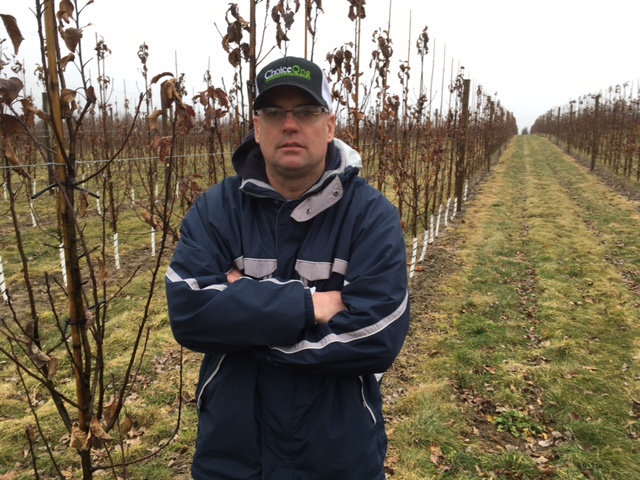
Kent County apple grower Rob Steffens: “I don't think people understand just how much food is touched by migrant hands.” (Courtesy photo)
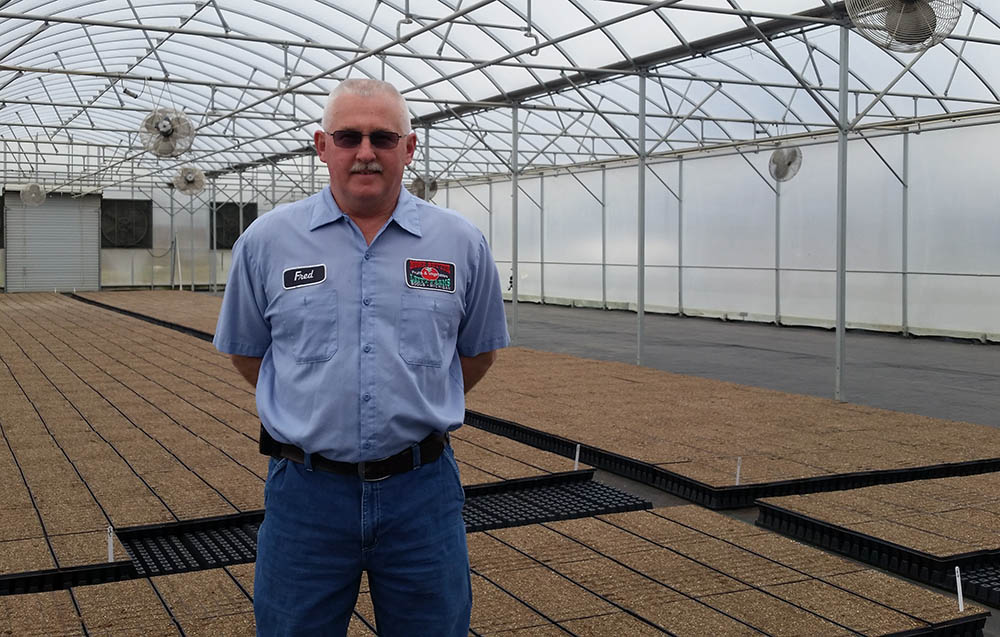
This time of year, Michigan fruit and vegetable farmer Fred Leitz tends to focus on things like the weather, pests like the brown marmorated stink bug and what kind of prices his harvest might fetch.
With 700 acres of cucumbers, cantaloupe, tomatoes, apples and blueberries on his Berrien County farm in the southwest corner of Michigan, there's plenty at stake.
But like other growers around Michigan, Leitz has another worry these days: Will there be enough workers to pick the crops?
“If we lost a significant part of the workforce after we had everything ready to harvest, we would go out of business. Everything is hand-harvested,” Leitz said
Leitz
Berrien County grower Fred Leitz said Michigan's crop industry would “collapse” without undocumented labor. (Courtesy photo)
His concerns were heightened by enforcement measures announced Feb. 21 that give U.S. immigration agents sweeping authority to target “removable aliens” for deportation, in effect making most of the nation’s estimated 11 million undocumented immigrants priority for removal. The guidelines – which largely fulfill campaign pledges by President Donald Trump - empower local police to aid immigration enforcement and call for the hiring of 5,000 more border agents and 10,000 more immigration agents.
Michigan growers fear these measures – if funded and approved by Congress -- will drive away workers critical to their operations, given that undocumented labor remains a key part of the nation's farm work force.
According to a 2014 report by the American Farm Bureau Federation, undocumented workers comprise fully half of  hired U.S. farm workers. There is no such calculation specific to Michigan agriculture, where the seasonal workforce is about 45,000.
Within the past month, Leitz said, he's already heard from a few of his past workers that they won't be coming back this year. Most are originally from Mexico, but have lived in the United States for the past 10 or 20 years. “They're afraid. They're not going to budge from where they are right now,” he said.
He added: “If you took all the undocumented workers out of Michigan, crop agriculture would collapse.”
The concern over farm labor is acute in the fertile swath of land that stretches along the west side of the Lower Peninsula from north of Traverse City through Kent and Ottawa counties all the way south to the Indiana border. That's where the bulk of fruit, including apples, strawberries, cherries and blueberries, is grown as well as a variety of vegetables that must be hand-harvested.
In a state that ranks at or near the top in the nation in cherry and blueberry production – and where fruit and vegetables account for a $1.4 billion economic impact – the viability of seasonal farm labor is no small matter.
Even before the announced immigration crackdown, Michigan farmers were calling for fixes to a  system they say fails to provide a reliable supply of workers for their operations. The problem as they see it: Most non-immigrant Americans just won't do the work.

The Work They Do

Undocumented workers are a key part of numerous U.S. economic sectors
26 percent of farming, fishing and forestry
17 percent of building, ground, cleaning and maintenance
14 percent of construction
11 percent of food preparation and serving
9 percent of production
Source: Pew Research Center
About an hour north of Grand Rapids, the owner of a large fruit and vegetable operation recalled attending a conference summoned to offer ideas for plugging the farm labor shortage. He farms more than a thousand acres of carrots, asparagus and other vegetables and said he would not survive without immigrant labor.
As he recalled, someone at the conference suggested, “Why don't you bus in college kids to do the work?'”
He said someone else replied, “'They would be back on the bus by noon.'”
The farmer – who asked that his name not be used, added: “I just think Americans aren't going to do it. College kids aren't going to do it. It's just the way it is. It's hard work. I wouldn't do it myself.
“I just think Americans aren't going to do it. College kids aren't going to do it. It's just the way it is. It's hard work. I wouldn't do it myself.” -- farmer in west Michigan, talking about hand-harvesting crops
“Our system is broke, but most people won't admit to it.”

From farm to table

There's apprehension as well in Michigan's restaurant and tourism industries, which also depend on immigrant labor. According to the Pew Research Center, undocumented workers comprise 17 percent of U.S. building, ground, cleaning and maintenance workers and 11 percent of U.S workers in food preparation.
Justin Winslow, president and CEO of the Michigan Restaurant Association, said his organization is closely following immigration developments on Capitol Hill.
“It will definitely impact this industry. It is something we follow and take very seriously,” he said.
winslow
Justin Winslow, president and CEO of the Michigan Restaurant Association, said his industry is concerned that a labor shortage could be made worse if immigrant workers are removed rather than given some path to citizenship.
Winslow said Michigan restaurants employ 435,000 people in a $15.9 billion industry; one that is facing a likely worker shortage over the coming decade as commercial growth outpaces the supply of local labor. It is expected to need another 37,400 workers within 10 years, while the population of the state’s biggest age cohort – those age 16 to 24 – is projected to shrink.
Winslow noted that the National Restaurant Association has adopted a formal position calling for a clear path to legalization for the 11 million undocumented U.S. residents.
“It is not a position the Michigan Restaurant Association has opposed,” he said.

Frustration with visa program

Michigan farmers interviewed for this article say the labor pinch has tightened as a smaller numbers of migrant workers come north, in part because of a more secure border with Mexico. At the same time, an older generation of migrant workers is aging out of the work force while their children have moved on to better jobs outside agriculture.
In recent years, more Michigan farmers have turned to a visa program that provides temporary foreign workers for their operations. While it added nearly 5,000 workers in 2016, farmers say the H-2A visa program for agricultural workers is cumbersome and expensive.
Berrien County fruit and vegetable grower Russell Costanza said he turned to H-2A the past couple years for workers, after he had increasing trouble finding domestic migrant labor. They now comprise the bulk of the 130 workers he needs for his operation, since his domestic workforce dropped from 110 a few years ago less than 20 today. He farms about 500 acres, growing Roma tomatoes, cucumbers and a variety of hot peppers.
His assessment of the visa program: “It doesn't work. It's broken. It's too expensive and there are too many hoops to jump through.”
Under the program, farmers are required to advertise in local newspapers for job openings before accepting foreign workers. Farmers must also pay for transportation to and from the foreign country and provide housing and three meals a day. The 2017 wage for these workers in Michigan is set at $12.75 an hour.
“On top of that, I've got an expense of about $2,000 an employee. By the time I'm done, they are costing me $17 or $18 an hour,” Costanza said.
Costanza said he's lost money on his farm operation the past couple years, adding that he would consider shuttering it if it weren't for the involvement of his adult children in the farm.
“If it was up to me, I wouldn't plant a crop this year. It's too risky. If I didn't have the kids involved I would shut it down.”
John Kran, associate national legislative counsel of the Michigan Farm Bureau, agreed that the visa program “is not a perfect system at all. It's not going to work for everybody, that's for sure.
“Right now, it's the only tool in the federal tool box.”
Kran said farmers have been asking for decades for a more flexible guest worker program – thus far, to no avail.
“It's getting harder and harder to find people who are willing in agriculture, especially in jobs that will last only two or three months. We need to make sure we have people here ready and willing to work in agriculture.”
And beyond the fruit and vegetable industry in Michigan, Kran said dairy farmers are also facing labor troubles since the H-2A program is aimed at seasonal farm workers – not the permanent employees dairy farms need.
“It's very much an issue for dairy,” Kran said.

Economic pragmatism urged

In Kent County, apple grower Rob Steffens said he is increasingly concerned about what kind of workforce he will have this fall. With about 300 acres and 17 varieties of apples in his orchard, he needs 30 to 40 workers to harvest his crop. A fourth generation grower, he farms an area that extends north of Grand Rapids known as The Ridge, especially suitable for fruit because of its elevation, clay loam soil and proximity to Lake Michigan.
“I'm nervous,” Steffens said. “There's no doubt about it. I'm worried whether people are going to be willing to come up from Florida. I know there's a lot of fear out there.”
Steffens said he sees no point in deporting undocumented residents if they have not committed a serious crime.
“I understand if it is a felony. But to just say, 'Let's round them up,' is a big mistake. I want to talk about the guy who's working, who's working hard, who's helping his family.
“I don't think people understand just how much food is touched by migrant hands. I don't think the president understands this issue yet.”
Supporters of Trump, however, see the intended crackdown as fulfillment of campaign promises by the president.
Dan Stein, president of the Federation for American Immigration Reform, told the New York Times that limiting foreign labor would open up jobs for Americans.
“It doesn’t matter if it’s programming computers or picking in fields,” he told the Times. “Any time you’re admitting substitutes for American labor you depress wages and working conditions and deter Americans.”
Berrien County grower Fred Leitz needs about 225 workers at peak harvest time for his operation, about 170 of which he expects to fill this year with H-2A workers. Most of the rest presumably would be immigrant laborers.
“We have (Americans) that want to drive tractors, but nobody wants to harvest. Working in fields with hot or cold weather is not for everybody. American workers are far removed from working on farms with those conditions.”
Leitz said it's impossible to know for certain when workers are undocumented, since employers are required by law to accept a variety of forms of identity for employment, including a Social Security card, birth certificate and driver's license. They can easily be forged.
“You have to make sure it's not obviously fraudulent and accept it. If you ask too much for certain documents, you are discriminating.”
In the meantime, Leitz said he's uncertain what will happen at harvest time this year.
“That's the million-dollar question,” he said.
Leitz, the immediate past president of the National Council of Agricultural Employers, said he was in Washington, D.C. in early February for the organization's annual board meeting.
“There were growers from around the country there. They are having problems all over. It's not just a Michigan problem, it's a national problem.
“We make our  plans and have our crops in the ground and Congress does something that changes. You are stuck. My banker has asked me over the years, 'What happens if immigration comes and takes all your workers?' I just take my keys out of my pocket and threw it at him and say, 'It's yours.'
“He didn't like that.”

Monday, January 2, 2017

jan 2017

Finished Lost Profiles  memoirs of cubism, dad, and surrealism  by philippe soupault  translated by alan bernheimer  c 2016    very short 'chapters' about guillaume apollinaire, rene crevel, marcel proust, james joyce, georges bernanos, pierre reverdy, blaise cendrars, baudelaire, henri rousseau le douanier.  reminders of 2 semesters of french lit in college--familiar names but dim memories.  most interesting was the james joyce remembrances.  did baudelaire write you gave me your mud and i made it into gold--which he was going to put in his les fleurs du mal.   Tu m’as donné ta boue et j’en ai fait de l’or.

  • You gave me your mud and I have turned it to gold.
    • "Ébauche d’un épilogue pour la 2e édition," Les Fleurs du Mal (1861), Appendice II: Autres pièces 


just finished reading Lost Profiles memoirs of cubism, dada, and surrealism by philippe soupault (translated into english). what a pleasant retreat to college french lit classes, art history classes, and a 'crazy' french surrealism class. soupault shares visits w/so many writers and artists that for a while i was lost in their past. enjoyed the james joyce chapter maybe the most but baudelaire, apollinaire and henri rousseau were treasures too


In one night, the GOP voted to take away these 6 essential health benefits

Republicans showed exactly where they stand.


nt Donald Trump withdrew from the Trans-Pacific Partnership (TPP).
“Trade is vital to the success of our nation’s farmers and ranchers,” he said. “More than 25 percent of all U.S. ag production ultimately goes to markets outside our borders.
“While President Trump signed an executive order (Jan. 23) withdrawing our nation from the Trans- Pacific Partnership, we viewed TPP as a positive agreement for agriculture – one that would have added $4.4 billion annually to our struggling agriculture economy,” Duvall said. “With this decision, it is critical that the new administration begin work immediately to do all it can to develop new markets for U.S. agricultural goods and to protect and advance U.S. agricultural interests in the critical Asia-Pacific region.
“American agriculture is virtually always a winner when trade agreements remove barriers to U.S. crop and livestock exports because we impose very few compared to other nations,” Duvall said. “We have much to gain through strong trade agreements. AFBF pledges to work with the administration to help ensure that American agriculture can compete on a level playing field in markets around the world. But we need the administration’s commitment to ensuring we do not lose the ground gained -- whether in the Asia-Pacific, North America, Europe or other parts of the world.”
This is why, Duvall said, “we believe it is also important to re-emphasize the provisions of the North American Free Trade Agreement with Canada and Mexico that have been beneficial for American agriculture. U.S. agricultural exports to Canada and Mexico have quadrupled from $8.9 billion in 1993 to over $38 billion today, due in large part to NAFTA. Any renegotiation of NAFTA must recognize the gains achieved by American agriculture and assure that U.S. ag trade with Canada and Mexico remains strong.
“AFBF will work with the administration to remove remaining barriers that hamstring the ability of America’s farmers and ranchers to benefit from trading relationships with our important North American trading partners.”


Vice President-elect Mike Pence, flanked by Senate Majority Leader Mitch McConnell and Sen. John Barrasso CREDIT: AP Photo/Cliff Owen

By Melissa Boteach and Jeremy Slevin
Last night while you were sleeping, the Senate debated and ultimately passed a budget resolution that provides a pathway for Republicans to strip health care coverage away from 30 million Americans without having a single Democratic vote.
As the Senate debated the resolution that provides a blueprint to repeal the Affordable Care Act, both Republicans and Democrats had the opportunity to offer a flurry of rapid-fire amendments in a process known as “vote-a-rama.” While these votes are non-binding, the exercise provides an opportunity for senators to show where their colleagues stand on a number of key issues. And the results are not pretty.
Senate Republicans took several votes that showed they are not on your side. Last night, Republicans voted against amendments that would:
1. Protect people with pre-existing conditions
Republicans blocked an amendment that would have made it harder to take away coverage from Americans with preexisting medical conditions. 52 million people — about 1 in 4 non-elderly Americans — have preexisting conditions. These Americans are more likely to face significant health costs, and before the Affordable Care Act, were often denied coverage entirely. The amendment also would have protected coverage for people disabilities or chronic health conditions, and prevent plans from discriminating based on health. Republicans currently have no alternative plan to insure people with preexisting conditions. Only two Republicans — Maine’s Susan Collins and Nevada’s Dean Heller — voted for the amendment.
2. Let young adults stay on their parents’ plan
Republicans blocked an amendment by Democratic Sen. Tammy Baldwin that would have made it easier young people to stay on their parents’ health care plan until they are 26 — one of the most popular and effective provisions of the Affordable Care Act. Over 6 million young adults have gained health insurance since the law was implemented in 2010, and young Americans now report better physical and mental health. The provision is also overwhelmingly popular — 85 percent favor keeping young people on their parents’ insurance plans. Sens. Heller and Collins were the only two senators who bucked their party on this vote.
3. Maintain access to contraceptive coverage
Thanks to Obamacare, birth control is more affordable than ever. Spending on contraceptive health care has gone down by 20 percent since the Affordable Care Act took effect. An amendment by Sen. Kirsten Gillibrand sought to continue this momentum. Unsurprisingly, Republicans blocked the provision 49–49. Sens. Collins and Heller both voted with Democrats.
4. Ensure Medicaid expansion stays in place
Medicaid expansion under the Affordable Care Act benefited 11 million low-income Americans in 2015 alone and has created thousands of jobs for direct care workers. An amendment by Sen. Bob Menendez (D-NJ) would have sought to continue Medicaid expansion, but it was blocked by Republicans — 48–50.
5. Protect children on Medicaid or CHIP
Republicans blocked an amendment offered by Senator Brown (D-OH) that would make it harder to ensure children could keep their health coverage on Medicaid or the Children’s Health Insurance Program (CHIP), both of which provide comprehensive health care services for children including key preventive and developmental care.
6. Protect veterans’ health care
Republicans blocked an amendment by Sen. Tester (D-MT) that would have made it harder to restrict veterans’ ability to access VA health care. While Democrats have sought to provide better funding and health care access at the VA, Donald Trump has proposed eliminating the agency altogether through privatization. A poll in 2015 found that almost two-thirds of survey respondents oppose plans to replace VA health care with a voucher system, an idea backed by many Republican lawmakers and presidential candidates.

Republicans say they want to replace Obamacare with something better. But in just one night’s votes, they indicated that they are not willing to take a stand to ensure that people with pre-existing conditions, women, children, veterans, young adults, people with disabilities, and struggling families can continue to access the affordable coverage they need going forward.
Melissa Boteach is the Vice President of the Poverty to Prosperity Program at Center for American Progress Action Fund (CAPAF), and Jeremy Slevin is the Associate Director of Advocacy for the same program. ThinkProgress is an editorially independent site housed at CAPAF.


sierra club info--we have about 279 million acres of public land and waters w/potential for oil and gas exploration.  (trump agenda)

public citizen news nov/dec 2016--article public pressure builds to keep national parks commercial-free  p. 13    "thanks to the historic efforts of national park enthusiasts to keep parks commercial-free, this is not currently the reality of a national park experience, but it could be if a new policy proposed by the NPS called director's order #21:Philanthropic Partnerships, is approved and finalized this year by NPS director jonathan jarvis.
the policy would allow parks to actively seek donations from corporate vendors, loosen rules on 'donor recognition' and lift various restrictions on naming rights in parks.  partnerships w/alcohol corporations also would be permitted...."


inthesetimes feb 2017:
'the miseducation of betsy devos' p 17
"charter schools were first authorized in the state in 1993 (mi).  in 2014 a yr long investigation by the detroit free press concluded that the state was spending 1 billion annually on charters that performed poorly, and were neither accountable nor transparent.  today, 80 % of the state's approximately 300 charter schools are operated by for-profit management.  since the onset of school choice, mi's performance on national tests has steadily declined"........."among those who have received campaign donations from devos and her husband are 4 senators who serve on the senate education committee, as well as senate leader mitch mcconnell."

p31 quotation:  AJ Liebling wrote 1960 'freedom of the press is guaranteed only to those who own one'
in 1983 the largest 50 corps controlled 90% of the media.  today, as a result of massive mergers and takeovers, 6 corps control 90% of what we see, hear, and read.  those 6 corps are  comcast   news corp   disney   viacom   time warner   cbs"

p 19 exxon mobil founder john d rockefeller   "the way to make money is to buy when blood is running in the streets"

example of the trash emails the right sends:
Sign the Sheriff Clarke Pledge


Today, 5:51 PM

This message was identified as spam. We'll delete it after 10 days. It's not spam | Show blocked content


guess they got repaid for urging ag people to vote for mr t. Trump’s first head-butt with agriculture?
January 24, 2017 Category: Markets & Weather
by AFBF.“We have much to gain through strong trade agreements,” said AFBF President Zippy Duvall.
U.S. agriculture creates jobs and supports economic growth in rural America, and American agriculture depends on maintaining and increasing access to markets outside the United States, said AFBF President Zippy Duvall after President Donald Trump withdrew from the Trans-Pacific Partnership (TPP).
“Trade is vital to the success of our nation’s farmers and ranchers,” he said. “More than 25 percent of all U.S. ag production ultimately goes to markets outside our borders.
“While President Trump signed an executive order (Jan. 23) withdrawing our nation from the Trans- Pacific Partnership, we viewed TPP as a positive agreement for agriculture – one that would have added $4.4 billion annually to our struggling agriculture economy,” Duvall said. “With this decision, it is critical that the new administration begin work immediately to do all it can to develop new markets for U.S. agricultural goods and to protect and advance U.S. agricultural interests in the critical Asia-Pacific region.
“American agriculture is virtually always a winner when trade agreements remove barriers to U.S. crop and livestock exports because we impose very few compared to other nations,” Duvall said. “We have much to gain through strong trade agreements. AFBF pledges to work with the administration to help ensure that American agriculture can compete on a level playing field in markets around the world. But we need the administration’s commitment to ensuring we do not lose the ground gained -- whether in the Asia-Pacific, North America, Europe or other parts of the world.”
This is why, Duvall said, “we believe it is also important to re-emphasize the provisions of the North American Free Trade Agreement with Canada and Mexico that have been beneficial for American agriculture. U.S. agricultural exports to Canada and Mexico have quadrupled from $8.9 billion in 1993 to over $38 billion today, due in large part to NAFTA. Any renegotiation of NAFTA must recognize the gains achieved by American agriculture and assure that U.S. ag trade with Canada and Mexico remains strong.
“AFBF will work with the administration to remove remaining barriers that hamstring the ability of America’s farmers and ranchers to benefit from trading relationships with our important North American trading partners.”